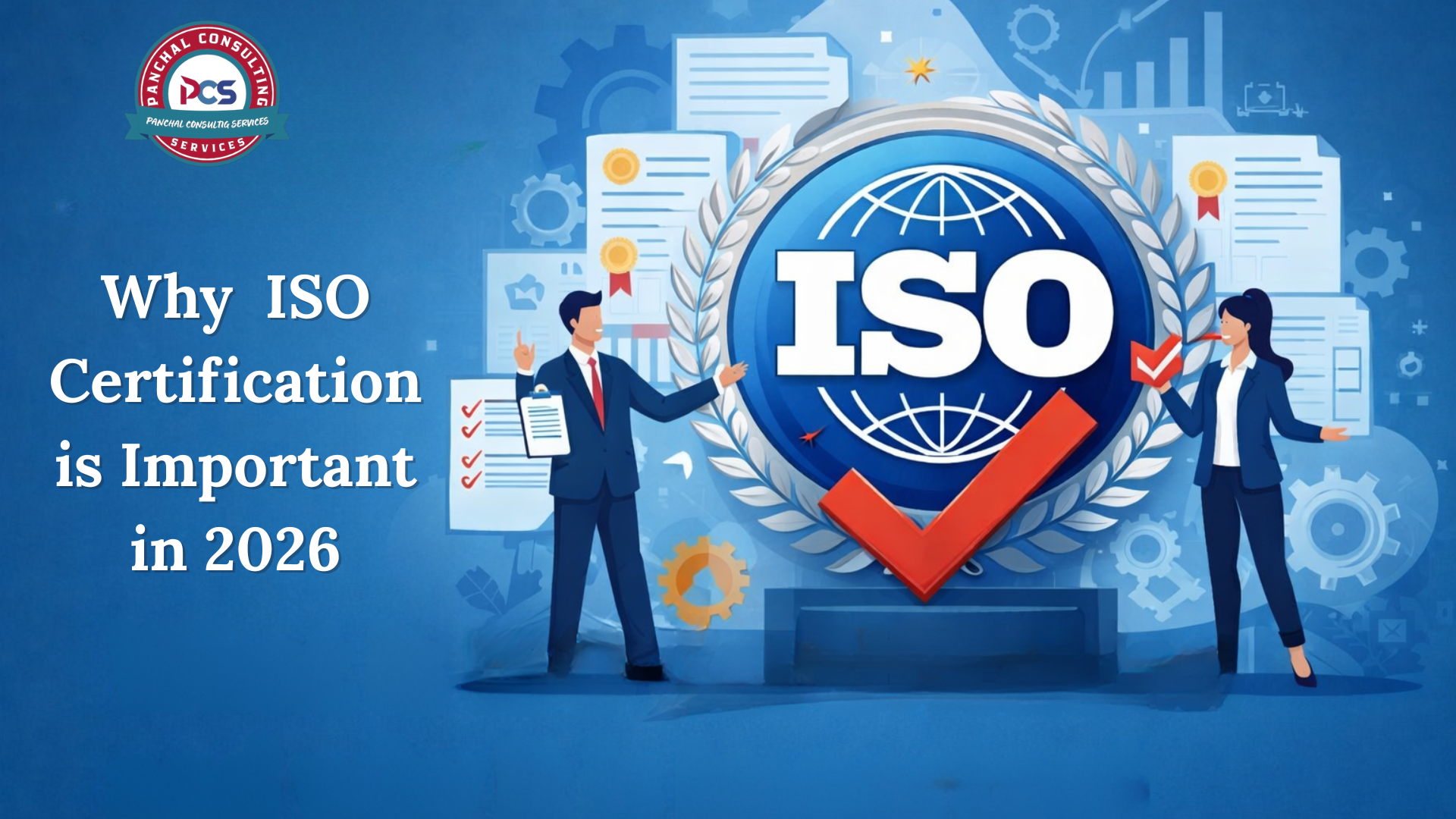
Why ISO Certification Is Important in 2026
Introduction – The Business Reality in 2026
In 2026, quality and security have become the non-negotiable benchmarks of corporate existence. We operate in an era when customer trust is fragile, and partners demand documented proof of reliability before signing any contract.For every Indian organization, from small-scale industries to large corporate entities, global compliance is now the chief indicator of professional accountability. Standardized certification is no longer optional; it has turned into a strategic asset for unlocking new tenders, government contracts, and international expansion.
How Compliance, Competition, and Customer Trust Have Changed
By 2026, the way we build professional bonds has fundamentally shifted. Today’s customers and partners aren’t just looking for a service; they are looking for proof of integrity in a hyper-competitive global arena. In this environment, trust has become the heartbeat of commerce, and the only way to earn it is by showing—not just saying—that you meet the world’s highest standards.
Why ISO Certification Is No Longer Optional for Growing Businesses
For a business with its sights set on growth, ISO certification is no longer a trophy for the shelf; it is the key that opens doors. Without it, ambitious companies often find themselves on the outside looking in, unable to join the high-tier supply chains and global networks that now consider standardized excellence a basic requirement for entry.
Understanding ISO Certification
Think of ISO certification as a universal seal of approval for business quality and security. By achieving this certification, an organization demonstrates that its internal processes are fully aligned with the rigorous global frameworks established by the International Organization for Standardization.
What ISO Certification Really Means for a Business
At its core, ISO certification signifies that a business operates with a high degree of consistency and reliability. It serves as a definitive promise to your stakeholders that quality, safety, and operational efficiency are not merely goals, but prioritized values embedded in every facet of your organization.
Difference Between ISO Standards and ISO Certification
While ISO standards act as the universal guidelines for best practices, ISO certification is the external verification of a business’s compliance. One provides the framework for excellence, while the other serves as the official recognition that your specific business has effectively integrated that framework into its daily operations.
Who Needs ISO Certification in 2026?
The target audience for ISO standards in 2026 is broad, encompassing:
- MSMEs and Startups looking to build a professional foundation.
- Manufacturers and Service Providers aiming for operational consistency.
- Exporters and Corporates navigating international trade requirements.
Is ISO Certification Mandatory in 2026?
ISO certification is often described as “practically mandatory” because, despite the lack of broad legal requirements, it is essential for commercial viability in 2026. For Indian enterprises, the standard acts as a critical gateway; without it, businesses face significant risks, including the loss of tenders and reduced trust among global partners.
ISO Requirements in Government Tenders and Corporate Contracts
To unlock high-value opportunities in 2026, Indian businesses must meet the ISO certification standards now required by almost all government and corporate entities. These certifications are now the standard gatekeeper for significant projects; the absence of such documentation typically leads to immediate disqualification. Businesses are often sidelined early in the process, regardless of the strength of their eventual bid.
Industry-Wise Compliance Expectations in India
Certain industries, such as healthcare, aerospace, and food production, face strict compliance expectations where specific ISO standards are the industry baseline.
When ISO Certification Becomes a Business Necessity
It becomes a necessity the moment a business decides to move beyond local retail and enter the world of B2B contracts, exports, or government procurement.
Why ISO Certification Is Important in 2026
In 2026, the value of ISO certification is defined by its ability to drive business credibility, process efficiency, and comprehensive risk mitigation.
- Building Business Credibility and Customer Trust: This certification functions as a universal seal of quality, allowing your business to secure trust and build authority in a competitive international arena.
- Improving Operational Efficiency and Process Control: By adopting these global standards, organizations can systematically identify redundancies, minimize procedural errors, and optimize their internal workflows for peak performance.
- Managing Risk, Compliance, and Legal Readiness: ISO frameworks provide the foresight necessary to identify vulnerabilities, ensuring your business remains compliant and legally secure in a volatile economy.
Role of ISO Certification in Digital and Data Security
In the fully digitized landscape of 2026, securing data is no longer an IT concern but a core business requirement for companies of all sizes.
Why ISO 27001 Is Critical for Data-Driven Businesses
ISO 27001 represents the gold standard in information security, providing a comprehensive framework to manage and protect the digital lifeblood of your business.
Protecting Customer Data and Business Information
Certification acts as a critical safeguard in a high-risk environment, protecting your proprietary assets and maintaining the confidentiality of the customer data entrusted to you.
Meeting Cybersecurity Expectations of Clients and Partners
ISO 27001 certification is now the expected standard for B2B relationships, ensuring your business remains eligible for high-stakes digital partnerships and system integrations.
Sustainability and Environmental Responsibility in 2026
By 2026, sustainability is no longer an optional CSR initiative—it has become a fundamental business necessity.
Rising ESG Expectations from Corporates and Global Clients: Strong ESG performance is now crucial for attracting investments and international collaborations, with ISO 14001 playing a key role in strengthening ESG credibility.
Why ISO 14001 Is Essential for Today’s Businesses: ISO 14001 enables organizations to control environmental impacts, minimize waste, and enhance efficient use of resources.
Which ISO Certification Is Right for Your Business?
Choosing the right standard depends on your industry and goals.